Uncategorized

The Weather Station

The station is a Davis Vantage Vue — a compact, integrated weather sensor array designed for home and enthusiast use. Despite its modest size, it’s a serious piece of kit that measures several atmospheric conditions simultaneously. The sensor array is mounted outdoors and houses instruments for: The entire sensor array is pole-mounted in the garden, giving it an

Falling Back: What the October Clock Change Does to Our Weather

An Hour Stolen, or an Hour Moved? When you wake on Sunday 25 October, nothing about the atmosphere over Somerset will have changed. The air pressure, the temperature, the moisture in the ground — all of it will carry on exactly as before. The clock change is a purely human adjustment, a bookkeeping entry in

Why October Days Feel Shorter

The Double Whammy: Astronomical and Psychological Factors It starts with the maths. By mid-October, Somerset sees sunrise around 7:15–7:30 BST, pushing past 8:00 BST by month’s end. Sunset slips from roughly 6:40 PM to under 6:00 PM. That’s nearly 90 minutes of daylight lost across the month, compressed into what feels like weeks vanishing overnight.

The Polar Vortex: The Arctic’s Cold Storage and What Happens When It Spills

Every winter, high above the Arctic, a vast whirlpool of frigid air spins anticlockwise around the pole. It sounds like the stuff of disaster films, but the polar vortex is a permanent feature of our atmosphere — and mostly, we should be grateful for it. Its job is containment: it keeps the coldest air on

Wind Direction Shifts Through Autumn

The Wind Rose at Home Walk out on a calm autumn morning and you’ll notice something subtle: the wind doesn’t blow from where it did in July. Over weeks, sometimes almost imperceptibly, the predominant direction shifts. For Monkton Heathfield and the wider Somerset Levels, that shift runs from westerly in summer toward south-westerly as autumn

Hurricanes, Cyclones and Typhoons: One Storm, Many Names

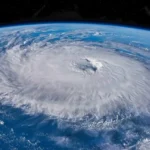
A Rose by Any Other Name Ask a forecaster in Miami what hit Florida last autumn and they’ll say “hurricane”. Their counterpart in Tokyo will say “typhoon”. In the Bay of Bengal, it’s a “cyclone”. All three are describing exactly the same thing: a rotating storm system of tropical origin, with sustained winds of at

Vitamin D

Why You Can’t Make Vitamin D from Winter Sunshine (Even on Bright Days)

On a crisp winter morning in Monkton Heathfield, the sun might shine brilliantly. The sky is blue, the air is still, and there’s not a cloud in sight. You step outside, feel the warmth on your face, and think: “That’s enough sunlight for Vitamin D, surely?” No — it isn’t. From October through March, the

Occlusions

If you were watching the BBC weather forecast recently you may have heard Ian Fergusson refer to ‘occlusions’. If you wondered what an occlusion is, read on. The Lifecycle Problem Every depression we experience in Somerset is born, matures, and dies. Understanding the occlusion means understanding that whole lifecycle, because an occlusion isn’t a third

Humidity vs Pressure: two clues in the air

The Invisible Squeeze Ask anyone what atmospheric pressure means, and you’ll usually get a shrug. Yet it’s one of the most valuable clues a weather watcher has. Pressure is simply the weight of all the air pressing down on you. Imagine the atmosphere as an ocean of gas several miles deep, resting on your shoulders.

The Equinox: The Moment the Whole Planet Holds Its Breath

In the early hours of Wednesday 23 September 2026 — at precisely 1:05 am British Summer Time — the Sun will cross the imaginary line of Earth’s equator, as seen from above. In that single instant, identical everywhere on Earth, the planet’s tilt points neither towards the Sun nor away from it. This is the

September: The month the hemisphere changes gear

The handover month Every September, something almost invisible happens across the entire northern half of the planet. As the Earth continues its orbit, our hemisphere tips gradually away from the sun, and the balance of energy shifts: less solar warmth arriving each day, and a longer dark night to shed what accumulated. The atmospheric machinery

The Autumn Equinox — When the Balance Tips

Around 23 September, the sun crosses the celestial equator — the imaginary line above Earth’s equator — and autumn officially begins in the northern hemisphere. On paper, this is the moment day and night stand in perfect balance: twelve hours each, a celestial scales held level before darkness slowly takes charge and carries us towards

Taunton Deane Weather Patterns

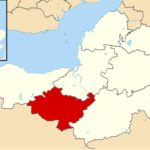
Weather is inherently local. While national forecasts give a broad picture, the reality on the ground can differ significantly — sometimes even within a few miles. This post explores what shapes the weather in and around Taunton Deane, and why a dedicated weather station in Monkton Heathfield matters. Setting the Scene: Geography Matters Taunton Deane

Weather Fronts: The Boundaries That Drive Our Weather

When you hear a weather forecast talk about a “cold front approaching” or a “warm front passing through,” you’re hearing about one of the fundamental drivers of day-to-day weather change. Weather fronts are invisible boundaries in the atmosphere — zones where two different air masses meet but don’t mix. Understanding what happens at these boundaries

Jet Stream: The High-Speed Highway That Shapes Our Weather

If you’ve ever wondered why British weather can be so unpredictable — one day sunshine, the next a storm — look up. High above our heads, racing across the sky at altitudes of 30,000 feet, sits the jet stream. This ribbon of fast-moving air doesn’t just fly over our heads; it decides what kind of

Shade Temperature

When you see a weather forecast reporting “20°C today”, you’re looking at the shade temperature. It’s the figure displayed on this site in the WS40 temperature gauge, recorded by the Davis Vantage Vue sensor array in the garden. But why does the measurement have to be in the shade? And what does “shade temperature” actually tell

Cloud Types & Classification — Reading the Sky’s Script

Look up at the sky on any given day in Monkton Heathfield and you’re seeing something extraordinary. Those white cotton wool balls, the blanket of grey pressing down before a storm, the delicate wisps circling high above — they’re not just scenery. They’re data points written in water vapour, telling a story about what’s happening

Climate vs. Weather — What’s the Difference?

If you’ve ever heard someone say “so much for global warming” during a cold snap in February, you’re not alone. It’s one of the most common misunderstandings in everyday conversation about the atmosphere. Weather and climate are closely related, but they’re not the same thing — and confusing the two can lead to some very

Scroll to Top